中文
News 

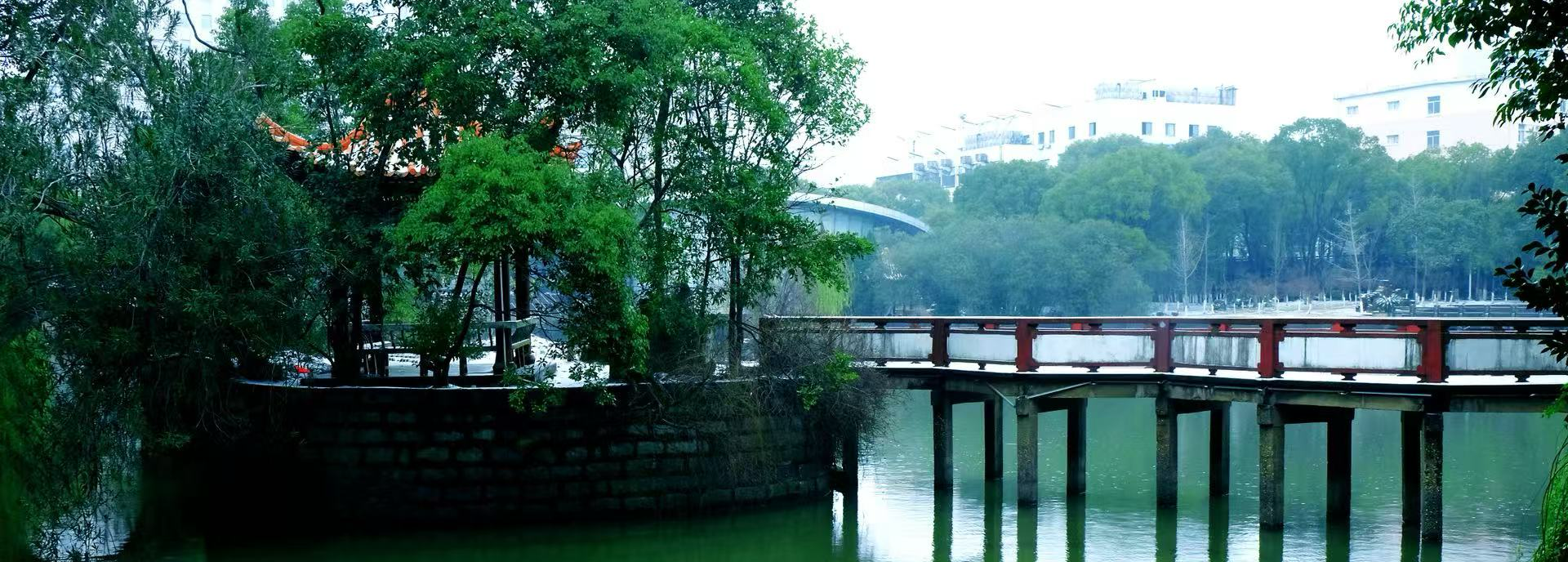
From October 22 to 31, the Jiangxi Provincial Chinese Language International Promotion Project"Red Heritage, Green Vistas · Discover Jiangxi Through Language" Young Chinese Ambassador Cultivation Program was held at JUFE. Over tendays, overseas trainees from Vietnam, Indonesia, Japan and othercountries attended 15 lectures — not only on campus, but also atcultural landmarks such as the Jiangxi Provincial Museum, the August 1st Nanchang Uprising Memorial Museum and Yuzhang Academy — readinga three-dimensional, living Jiangxi between the lecture hall and theroad.
The journey began with the"roots" of Chinese civilization and unfolded through listening, reading and writing. Professor Peng Shuxin's lecture,"Confucian Culture and the Learning of Self-Cultivation,"brought the classical ideal of "cultivating oneself, regulating the family, governing the state and bringing peace to the world"down to the everyday cultivation of young people. Teacher Yu Yibingled Chinese and international students into the "One Voice"classics recitation session, moving from "Guan Ju" in the Book of Songs and Li Bai's "Viewing the Waterfall at Mount Lu"to "Preface to the Pavilion of Prince Teng" and MaoZedong's "The Long March," before concluding with a choral reading of the Analects — letting the classics travel from the pageto the voice. Teacher Ye Hui explained the essentials of brush calligraphy, and trainees took up their brushes to write famous linesfrom the Analects, touching the warmth of Chinese civilization strokeby stroke.
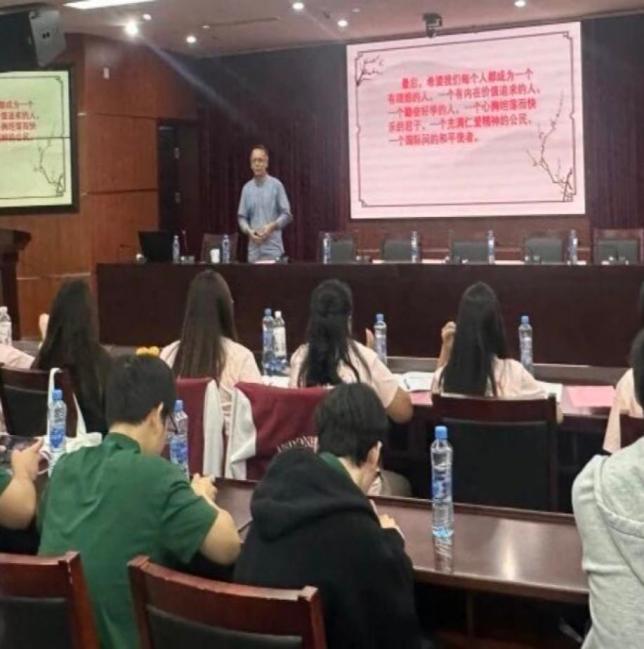
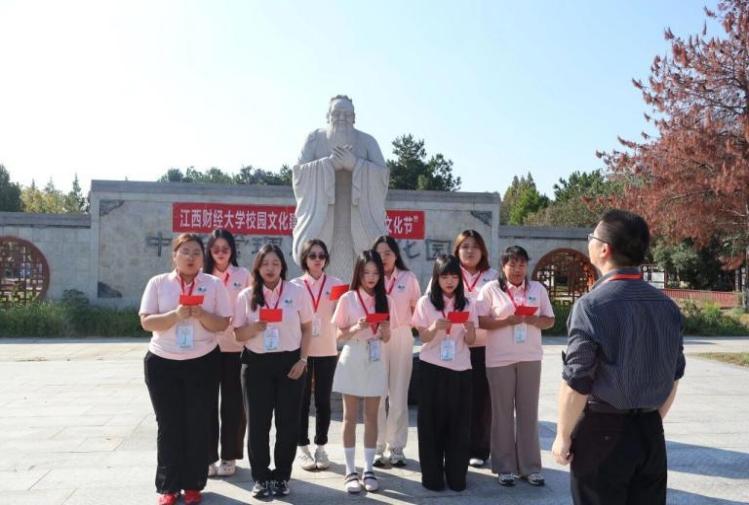
Lectureby Peng Shuxin Lectureby Yu Yibing
How can tradition be kept"alive" today? At JUFE's Tax Receipt Museum, Teacher Ye Wenwen took the university motto — "Xin Min Lian Yi"(Integrity, Agility, Probity and Perseverance) — as her thread,turning yellowed tax receipts into vivid teaching materials linking Chinese learning with cultural understanding. Teacher Duan Xue lutraced Chinese characters back through oracle bone script, bronzeinscriptions and small seal script, explaining the Chinese culture embedded in the writing system and, by unpacking the wisdom of character formation, enabling overseas trainees to appreciate the beauty of its evolution. At Yuzhang Academy, Teacher Lai Xiaojun'slecture "China in Porcelain" surveyed the development ofJingdezhen's ceramic art, and trainees painted patterns by hand onunglazed porcelain blanks in the antique academy — a meeting acrosstime between the academy's scholarly lineage and ceramic art.
If characters and porcelain represent the quiet decoding of culture, tai chi and table tennis brought Chinese culture to life in motion. In the tai chi session,Teacher Zhong Donggen led trainees to experience the philosophy of"overcoming hardness with softness" through breath and movement, while the university tai chi team's flowing sword andbroadsword routines drew round after round of applause. In the tabletennis hall, Coach Peng Yongshan patiently guided trainees through the sport, and the international participants traded multi-roundrallies with the coach amid cheers and laughter. From the balance of hardness and softness in tai chi to the back-and-forth of the"national ball game," trainees moved from quiet observation to bodily engagement.
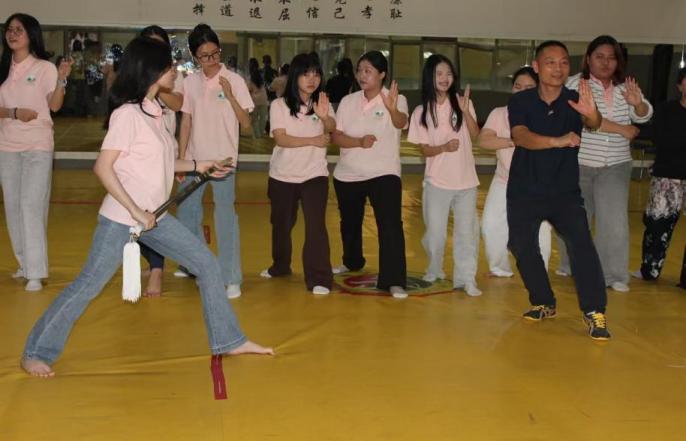
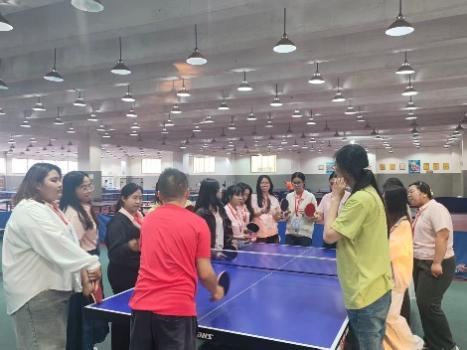
Practicingtai chi Experiencingtable tennis
To understand China, one mustlook at both history and the present. Professor Yin Zhonghai's"Colorful and Interconnected Contemporary Chinese Society"traced social change through China's three-step terrain and the HuHuanyong Line; when data on the overseas popularity of short dramas —a genre familiar to the Vietnamese trainees — appeared on screen,the room warmed with animated resonance. Moving from social life tothe digital wave, Dr. Xiong Jianran focused on "The Digital Economy and Chinese Corporate Practice," interpreting the diverse models and real-world challenges of Chinese digital companiesgoing global. On the Chinese-language teaching front, Teacher PeiZuhua, a recipient of JUFE's "Top Ten Teaching" award,distilled five teaching principles and demonstrated six teaching methods in "From Learning Chinese to Teaching Chinese,"igniting trainees' confidence in making the transition from learner to teacher.
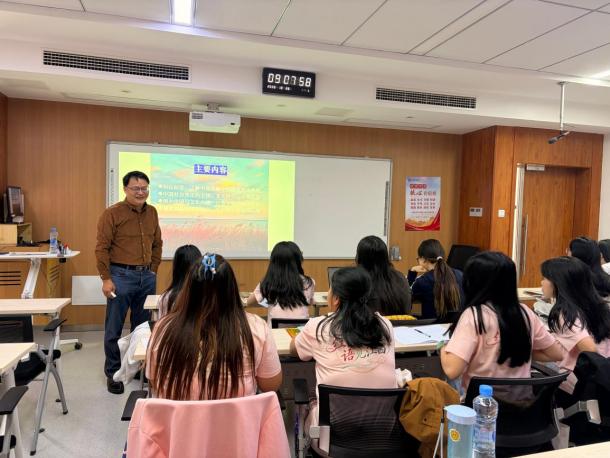
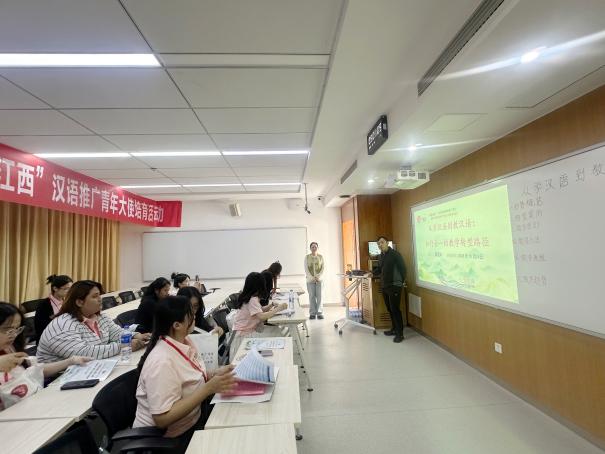
Lectureby YinZhonghai Lectureby YeWenwen
Beyond the campus lecturehalls, the lectures extended to Nanchang's cultural landmarks. At theJiangxi Provincial Museum, Teacher Xiong Zhoumengwei drew on thecollection for "From Bronze to Porcelain: Gan-Po Culture in the Collections of the Jiangxi Provincial Museum," leading trainees to sense ancient Gan-Po civilization through bronzes and porcelains.At the Bada Shanren Memorial Museum, Teacher Chen Xianying lecturedon "Visual Encoding, Symbol Construction and Communication in Traditional Chinese Painting," decoding the symbolic system and aesthetic concepts behind the brush-and-ink language of Chinesepainting and guiding trainees to understand its distinctive visual expression and the expressive spirit of Eastern art.
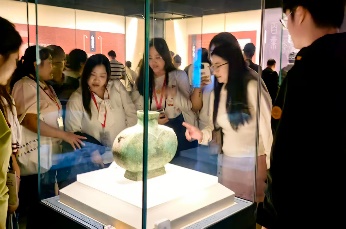
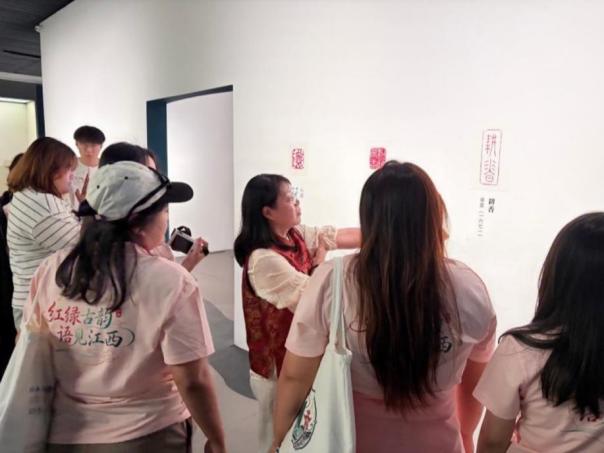
Visitingthe Jiangxi Provincial Museum Visitingthe Bada Shanren Memorial Hall
Drawing on these field experiences, Teacher Hong Lumin's "The Gan-Po Cultural Journeyand the Mission of Young Chinese Language Ambassadors" took the threefold identity of Gan-Po culture — red, green and ancient —as its entry point, interpreting the role and future tasks ofoverseas youth as envoys of Chinese language communication. In the sharing session that followed, trainees divided into three groups and presented their research findings in Chinese, expressing theirintention to take the stories of Gan-Po back to their home countriesand to serve as young envoys who know and befriend China. In"Cultural Exchange from the Perspective of Mutual Learning Among Civilizations," Teacher Zhu Youlun analyzed Chinese culture through five dimensions, including learning from history and harmony between humanity and nature, enabling trainees to feel deeply theopenness and inclusiveness of Chinese civilization and building another bridge of understanding for dialogue among civilizations.That bridge connects not only history with the present, but also the mutual trust and lasting friendship among Chinese and international youth.
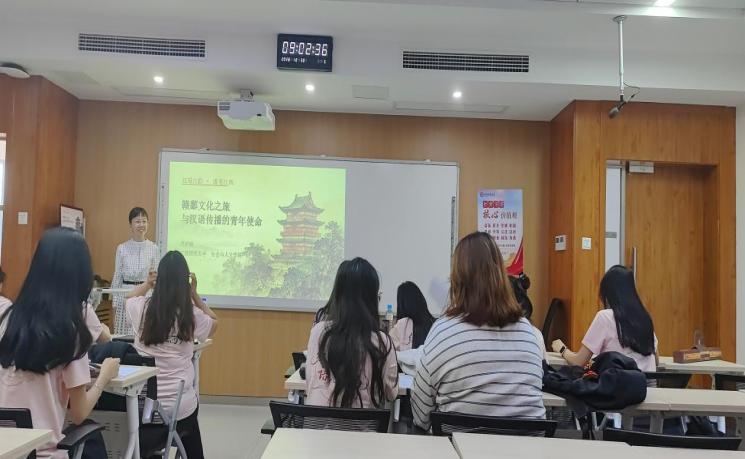
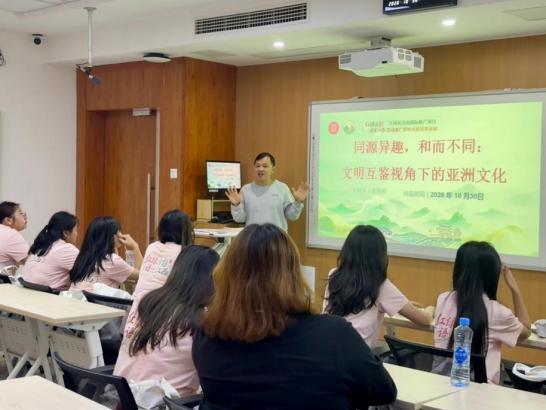
Lectureby Hong Lumin Lecture by Zhu Youlun
From Confucianself-cultivation to the global expansion of digital enterprises, from the origins of Chinese characters to mutual learning among civilizations, this program — with culture as the bridge and language as the medium — not only brought 15 lectures to life, but also let different civilizations shine in exchange and mutual learning, building a bridge of friendship that will be crossed againand again by Chinese and international youth.
(Text and photos by Hong Lumin, Cong Lixuan ,Li Mengping and Zhang Guoya; reviewed by Yin Weiwei, Chen Hua and Jiang Guohe)
Address:West Yu Ping Street, Changbei, Nanchang, Jiangxi Province, P.R.China Post code: 330013
Copyright © School of Sociology and Humanities All Rights Reserved