中文
News 


Translator:Hong Lumin, Chen Jialuo Reviewer:Jiang Guohe
FromAugust 24 to 28, 2026, the 'Hong Kong Advanced Seminar on Social Organization Management' was successfully held in Hong Kong.During the five-day seminar, participants visited six institutionsand organizations — the University of Hong Kong, the Ebenezer School and Home for the Visually Impaired, the Prince Edward Community Living Room of the Lok Kwan Social Service, the Hong KongFederation of Youth Groups, the Chinese University of Hong Kong, andthe Hong Kong Polytechnic University — and took part in sixdiscussion and exchange workshops on topics including partnership building, collaboration in services for the visually impaired,community governance innovation, community governance innovation,youth development, and welfare policy and technological application.In this 'classroom on the move,' they observed up close and engaged in immersive learning about the operating logic and professional wisdom of Hong Kong's social services, gaining apanoramic understanding of the innovative practices and development experience of Hong Kong's social work.
On the morning of August 25, the seminar's first stop took participants to the University of Hong Kong on Pok Fu Lam Road, where they attended a thematic workshop titled 'Cross-Sector Symbiosis:Building Partnerships Among NGOs, Enterprises, and SocialEnterprises.' In-depth exchanges were held around topics such ashow social service organizations can build sustainable partnerships with commercial enterprises, how social enterprises can balance theirpublic welfare mission with market operations, and how to build mutually beneficial multi-party cooperation networks. As a flagship institution of higher education in Hong Kong, the University of HongKong is one of the earliest universities in Hong Kong to offer socialwork education. Its social work curriculum dates back to the 1960s and has long been known for its international perspective and research on organizational management. HKU has cultivated deep expertise in the fields of social innovation and civil society research over many years and possesses rich experience in nurturing nonprofit leaders. It previously co-hosted the 'Sustainable and Social Innovation Leadership Programme' with UBS, helping nonprofit leaders enhance their capabilities through cross-sectortraining and professional mentorship. The 'Innovating forSustainability' programme launched by its Centre for CivilSociety and Governance (CCSG), supported by HSBC, is dedicated tocultivating social entrepreneurship talent and expanding Hong Kong'ssocial enterprise ecosystem. Meanwhile, events such as the 'HKUCares Social Innovation Challenge' promote cross-sector collaboration, encouraging students and community stakeholders towork together to address social problems. Participants said that HKU's systematic experience in social enterprise incubation providesa replicable model for mainland universities and social organizations to develop social enterprise cooperation.
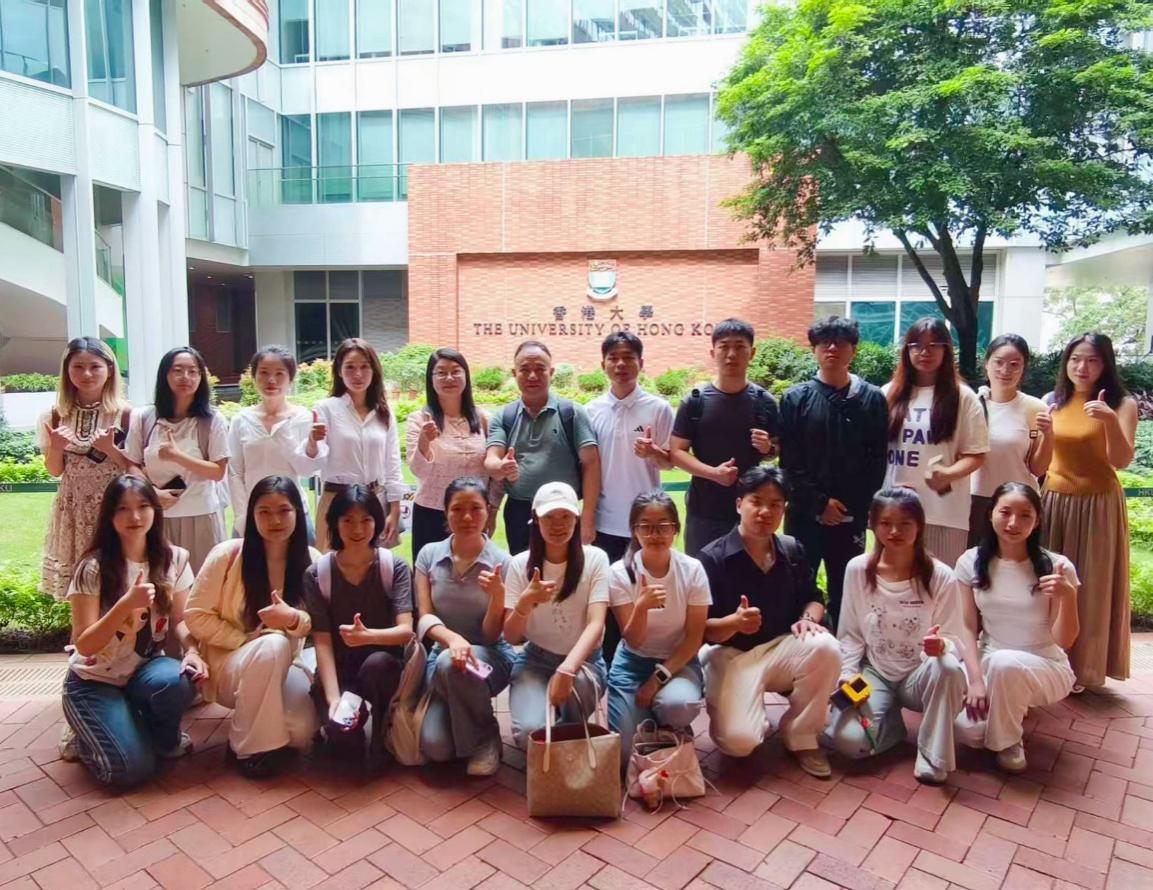
Visitto the University of Hong Kong
On the afternoon of the same day, the seminar visited the Hong Kong Ebenezer School and Home for the Visually Impaired, the Ebenezer Careand Attention Home for the Aged Blind, and the Ebenezer Early Intervention Centre for Visually Impaired Children, located at 131Pok Fu Lam Road, Pok Fu Lam, Hong Kong, with a history of nearly 130years. There, the second thematic workshop was held on 'Cross-SectorCollaboration in Services for the Visually Impaired: Building Partnerships Among Government, Social Enterprises, Communities, andCommercial Institutions.' Founded in 1897, starting from a small cottage sheltering four blind girls, Ebenezer has grown into the onlyinstitution in Hong Kong providing education and support services for visually impaired children, with a service network covering more than70 primary and secondary schools and special schools across HongKong. For over a century, Ebenezer has built a full-cycle service system for the visually impaired spanning early childhood education,school education, rehabilitation training, employment support, and elderly care services. Its 'Yes I Can' programme is dedicated to providing employment support for visually impaired youth, and the Cedar Workshop, founded in 2018, is Hong Kong's firstsocial enterprise led by visually impaired youth and has obtained Hong Kong social enterprise certification. Its Ebenezer Care and Attention Home for the Aged Blind provides residential care specifically for visually impaired elderly people, while the Ebenezer Early Intervention Centre provides professional training for visually impaired young children based on the concept of early intervention.From early childhood education to elderly care, the one-stop,whole-life service system for the visually impaired, together withthe multi-party collaboration model of 'government funding +social enterprise operation + community support + corporatedonation,' left a deep impression on the participants.
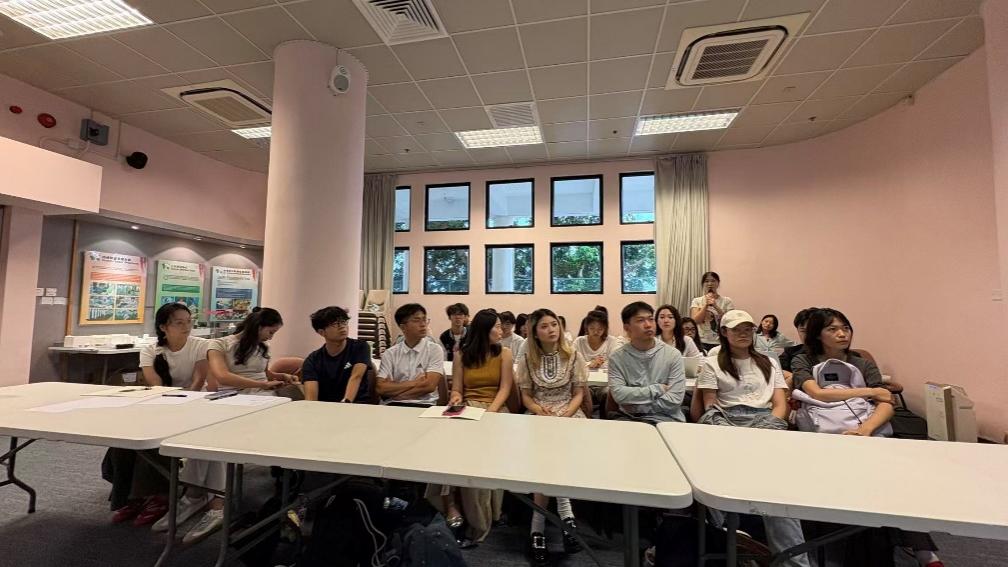
Seminarand Exchange at the Hong Kong Ebenezer School and Home for theVisually Impaired
Third Stop: Prince Edward Community Living Room — Value-Led Innovationin Grassroots Governance
On the afternoon of August 26, the seminar visited the Prince Edward Community Living Room, located at 51 Boundary Street, Kowloon, in the Mount Regency development and operated by the Lok Kwan Social Service, where the third thematic workshop was held on 'The Organic Integration of Patriotic Education and Social Services: AnInnovative Experiment in Community Living Rooms.' The Prince Edward Community Living Room is a flagship project of the Hong KongSAR Government's 'Community Living Room Pilot Scheme.'Covering about 5,000 square feet over three floors, it is Hong Kong's first community living room serving both Yau Tsim Mong and Sham ShuiPo, two districts with high concentrations of subdivided flats. It is expected to serve 500 subdivided-flat households and benefit 80,000 people each year. By July 2026, when it marked its first anniversary of operation, it had already served 523 households with a total of 1,386 members and provided cumulative services to over 160,000 person-times, doubling the original targets. The most distinctive feature of the community living room is its innovative deepintegration of patriotic education with community services, offering interest activities in traditional Chinese culture such as Chinesedance, guzheng, pipa, and martial arts to strengthen members' senseof national identity. Through 'government, business, andcommunity' collaboration, it not only addresses the practicaldaily difficulties of subdivided-flat families but also quietly andsubtly conveys values, achieving an organic unity of service functions and educational functions. This model offers new ideas for innovation in grassroots social governance and broadened the participants' horizons.
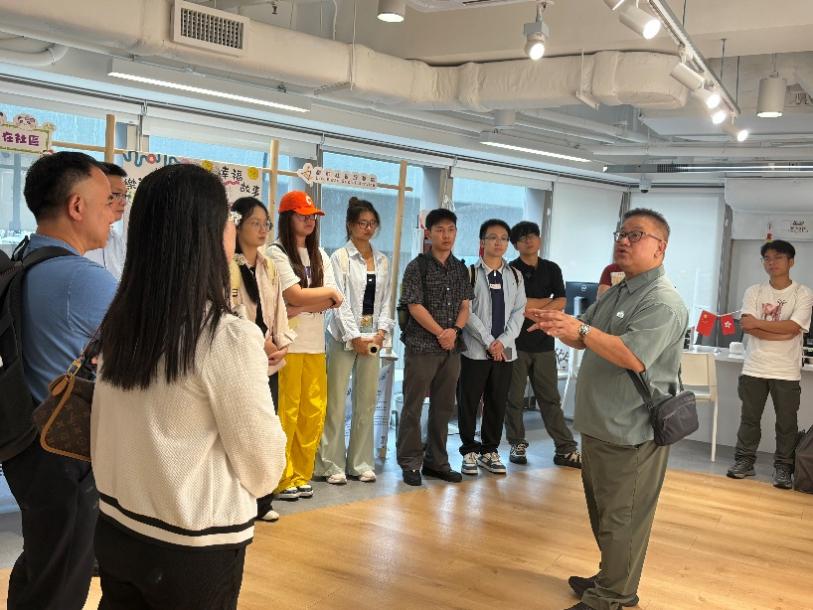
Seminarand Exchange at the Prince Edward Community Living Room of Lok KwanSocial Service
Fourth Stop: The Hong Kong Federation of Youth Groups — Design ThinkingEmpowering Youth Social Innovation
On the morning of August 27, the seminar visited the Hong KongFederation of Youth Groups at 302 Jockey Club Road, Fanling, New Territories, Hong Kong, where the fourth thematic workshop was held on 'Cultivating Youth Social Innovation Thinking: From DesignThinking to Community Problem-Solving.' Founded in 1960, theHong Kong Federation of Youth Groups is one of the largest nonprofityouth service organizations in Hong Kong, with more than 70 service units under its purview. It offers over 25,000 activities each year,attracting nearly 6 million participants, and has 460,000 registeredmembers. The Federation has long been committed to cultivating youngchange-makers through design thinking and social innovation methods,using a people-oriented design philosophy to identify community painpoints and transform them into feasible innovative solutions. Duringthe workshop, the two sides held in-depth exchanges on how to use design thinking to guide young people in discovering community problems and proposing innovative solutions. Participants believed that the Federation's model of 'youth space + innovative education + social practice' offers important inspiration for the mainland in cultivating young social work talent and promoting youth participation in community governance.
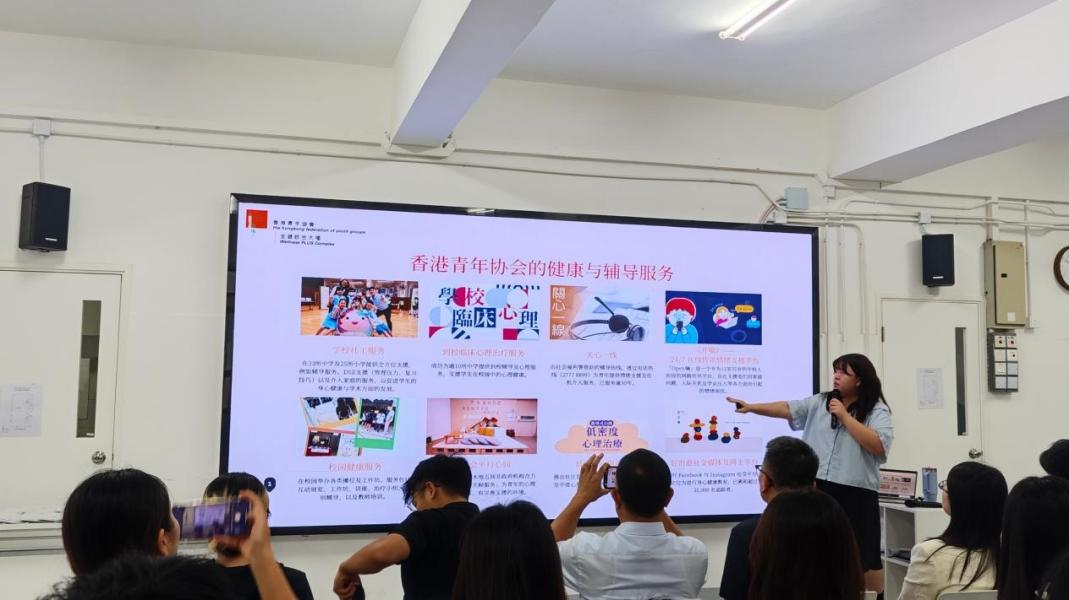
Seminarand Exchange at the Hong Kong Federation of Youth Groups
Fifth Stop: The Chinese University of Hong Kong — An AcademicPerspective on Social Welfare Policy
On the afternoon of the same day, the seminar arrived at the Chinese University of Hong Kong in Ma Liu Shui, Sha Tin, Hong Kong, where the fifth thematic workshop was held on 'Social Welfare Policy and Practice: Toward an Equal and Sustainable Future.' The Department of Social Work at the Chinese University of Hong Kong is a leading center of social work education in Hong Kong and theAsia-Pacific region, with the longest history and outstanding academic and professional standing. It is dedicated to training outstanding social work professionals, researching social welfareknowledge, and contributing to the development of Hong Kong society.The workshop focused on topics including the institutional design and development trends of Hong Kong's social welfare system, as well associal equity and sustainable development. Participants said that CUHK's academic perspective on policy research provided them with amore macro-level and in-depth analytical framework for understandingthe sustainable development of Hong Kong's social work and social services.
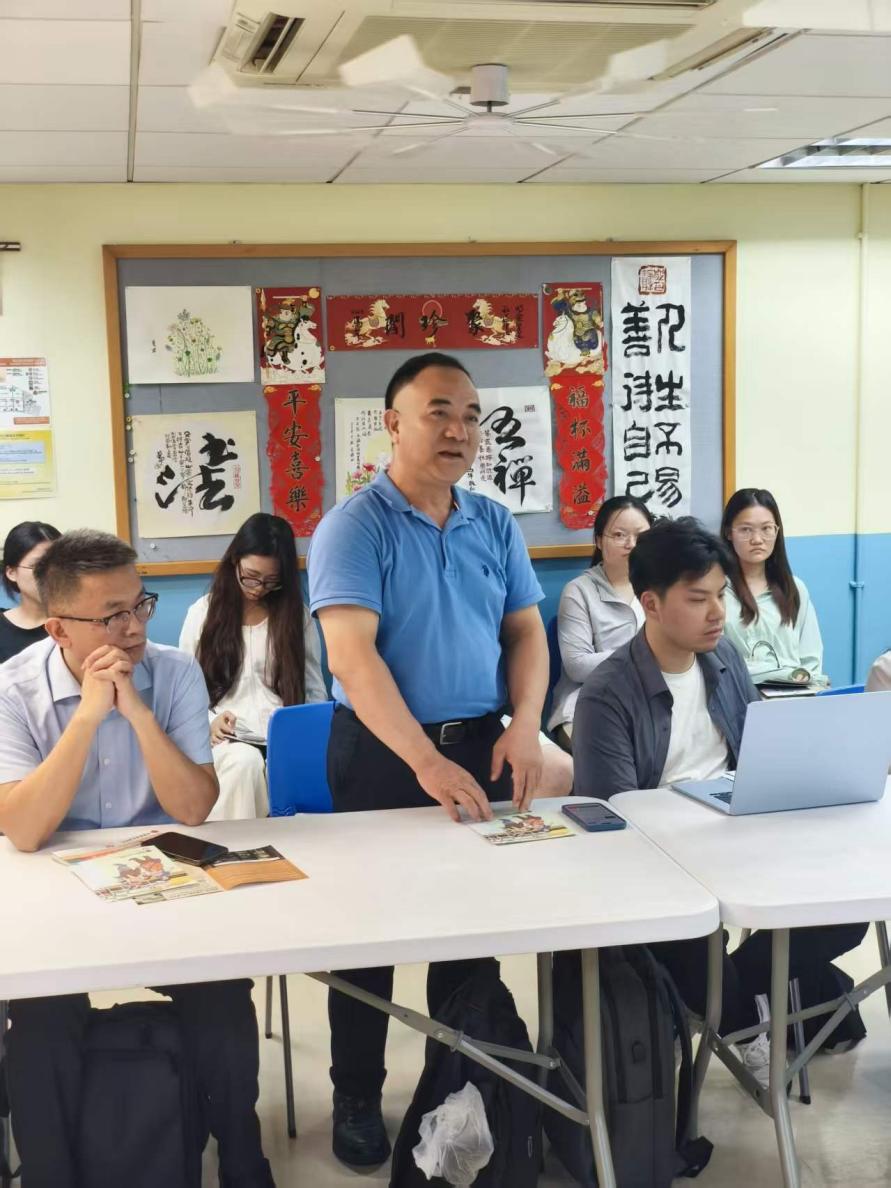
Exchangeat the Chinese University of Hong Kong
Sixth Stop: The Hong Kong Polytechnic University — AI Reshaping theFuture Landscape of Social Services
On the morning of August 28, the seminar's final stop took participants to the Hong Kong Polytechnic University at 11 Yuk Choi Road, HungHom, Kowloon, Hong Kong, where the sixth thematic workshop was held on 'Technology Application in Social Services: AI-Assisted Group Work Programme Design.' The Hong Kong Polytechnic University is at the forefront of applying technology to the field of social services. The workshop focused on how AI can assist social workers in optimizing group work procedures and improving service efficiency and precision. Participants engaged in lively discussions on the application scenarios of AI in case management, group work, and community services, jointly envisioning the development prospects of smart social services.
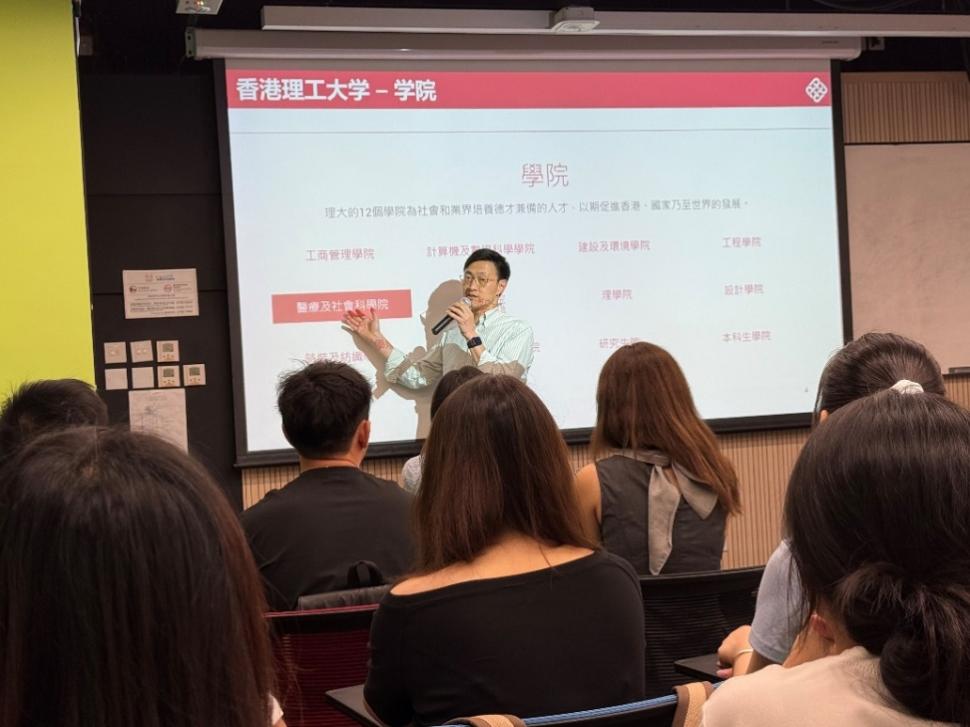
Seminarand Exchange at the Hong Kong Polytechnic University
The six workshops served as six windows, enabling the seminar participants to observe and understand the diverse ecosystem of HongKong's social work from all-round and multi-angle perspectives, and to glimpse the complete picture of Hong Kong's social services.Although the themes varied, they were all threaded by the same mainline: the 'cross-sector collaboration' methodology that Hong Kong's social service sector has developed through long-termpractice — government providing the platform, social welfareorganizations operating, the business sector contributing money an deffort, universities providing intellectual support, and community residents participating together. Participants said that these vivid examples from Hong Kong and the cross-cultural exchange workshops deepened their understanding of social work and social organization management, and provided a replicable path for innovation in mainland social work and social organizations. What they gained was not only knowledge and methods, but also the professional belief of'influencing life with life.' In the future, they will translate what they saw and learned into practical action to serve communities, support schools, and promote the high-quality development of social services in the mainland.
第
Address:West Yu Ping Street, Changbei, Nanchang, Jiangxi Province, P.R.China Post code: 330013
Copyright © School of Sociology and Humanities All Rights Reserved