中文
中文
News 


Recently,the 2026 International Postgraduate Conference and Research Forum(IPCRF) was held at The Education University of Hong Kong. ZhouYitong, a 2024-level graduate student in Sociology, and Song Yu, a2024-level MSW student, both from JUFESchool of Sociology andHumanities,participated in the forum under the supervision of Associate DeanHong Lumin. They delivered active presentations at the forum, fullydemonstrating the academic caliber of JUFE students.
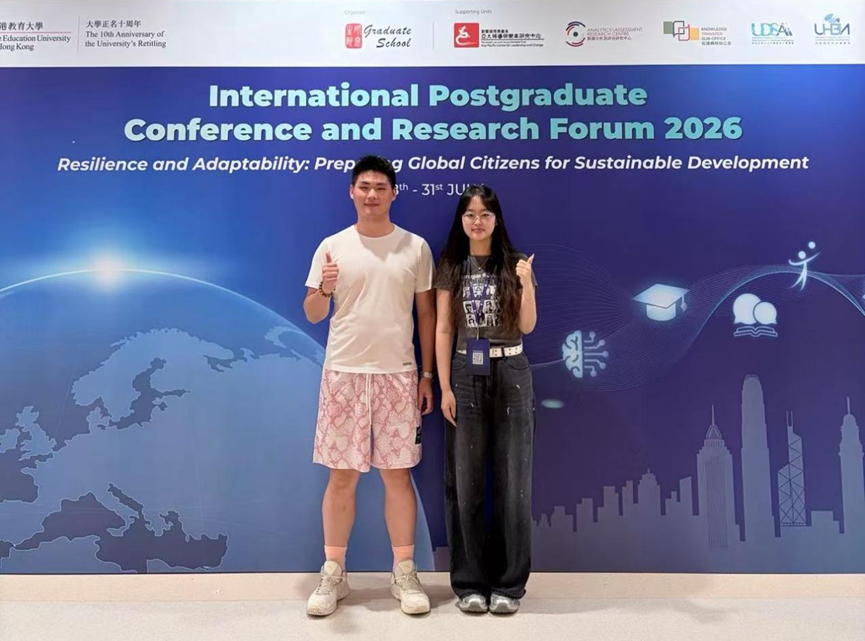
Thetheme of this year’s forum, “Resilience and Adaptability:Cultivating Global Citizens for Sustainable Development,” resonateswith JUFE’s“Digitalization, Greening, and Internationalization” (the “ThreeTransformations”) strategy on multiple levels, and also providedJUFE students with a valuable platform for interdisciplinarylearning. The forum brought together renowned scholars and graduatestudents from around the world, engaging in in-depth dialogues oncutting-edge topics such as artificial intelligence, languageeducation, mental health, and sustainable development. ProfessorSharif from The Education University of Hong Kong discussed pathwaysto mental health reconstruction from the perspectives of individualresilience and institutional belonging, arguing that studentwell-being depends not only on personal resilience but also onwhether universities create conditions of belonging, inclusiveness,and support. Subsequently, at the international panel roundtable,keynote speakers held a dialogue on “Thriving, Not Just Surviving:Interdisciplinary Perspectives on Sustainable Development and theHumanities,” exploring from multiple disciplinary angles howhumanity can achieve a balance between sustainable development andhumanistic care in a rapidly changing world.
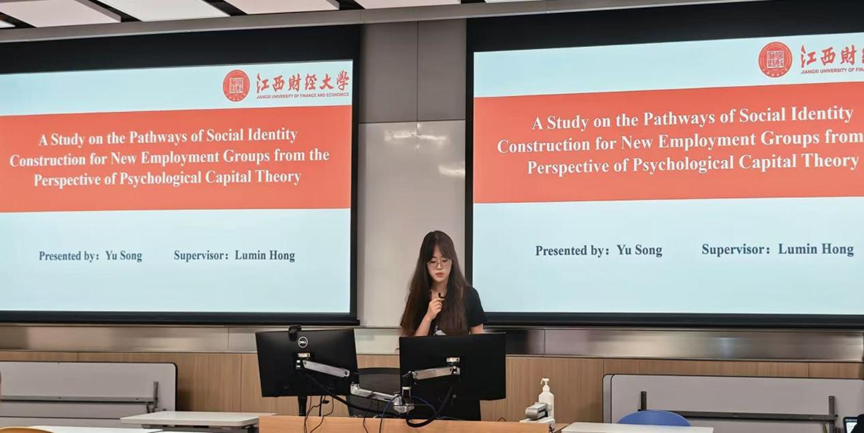
Thescholars’ in-depth discussions on psychological resilience andsocial belonging provided an important contextual framework for theyoung graduate students’ academic presentations. Song Yu’spresentation, titled “A Study on the Pathways of Social IdentityConstruction for New Employment Groups from the Perspective ofPsychological Capital Theory,” drew on psychological capitaltheory, integrated individual psychological empowerment mechanismswith community belonging construction pathways, focused on the socialidentity dilemmas faced by new employment groups, and systematicallyconstructed a multidimensional social identity cultivation system.This research transforms individual psychological capital advantagesinto momentum for group integration and social governance efficacy.This study strongly echoes the core theme of “resilience andadaptability” – responding to external environmental changes withindividual psychological resilience, and anchoring social belongingthrough adaptive pathways.
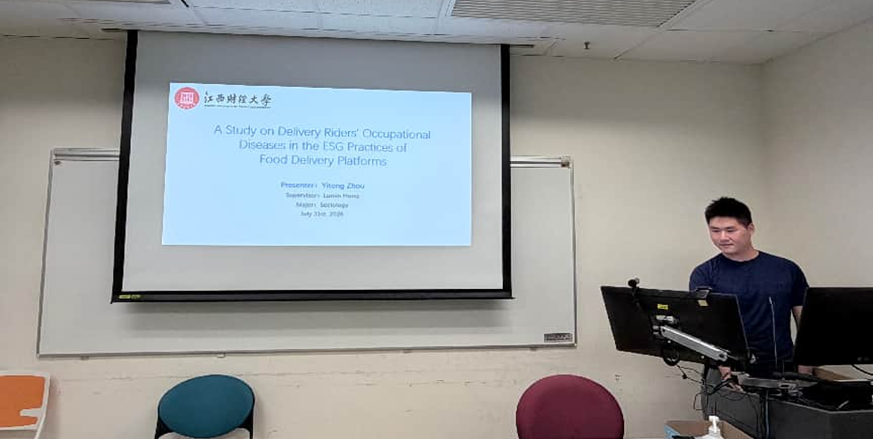
Sustainabledevelopment was a key focus of the forum, closely aligning with ouruniversity’s “Greening” strategic direction, and also highlycompatible with the Centre for Green Development and Chinese Path toModernizationand JUFESchoolof Sociology andHumanities’sdistinctive strengths in environmental social work and environmentalsociology. Addressing the real-world issue of platform governance andsustainable development of workers, Zhou Yitong delivered apresentation titled “A Study on Delivery Riders’ OccupationalDiseases in the ESG Practices of Food Delivery Platforms.” Hepointed out that current ESG practices of food delivery platforms arestill constrained by instrumental rationality and have obviousgovernance deficiencies. He proposed that platform governance shouldshift from risk compensation to risk prevention, promote theexpansion of responsibility from a single corporate entity tomulti-stakeholder collaboration, integrate riders’ occupationalhealth protection into the platform governance system, and achieve abalance between protecting workers’ rights and ensuring thelong-term sustainable development of the platforms.
Theacademic presentations by the two students not only activelyresponded to the cutting-edge issues raised at the internationalforum, but also reflected the research orientation of JUFE School ofSociology and Humanities, where graduate students ground their workin reality and address social problems. This high-level internationalacademic exchange was made possible by the School of Sociology andHumanities’s long-standing commitment to high-caliber talentcultivation, academic innovation, and international cooperation, andstands as a vivid practice of JUFE’s continued efforts to advanceinternationalization and actively engage with global academicfrontiers.
(Text& Photos: Hong Lumin, Zhou Yitong, Song Yu; Reviewed by: JiangGuohe,Schoolof Sociology and Humanities)
Address:West Yu Ping Street, Changbei, Nanchang, Jiangxi Province, P.R.China Post code: 330013
Copyright © School of Sociology and Humanities All Rights Reserved