中文
中文
News 


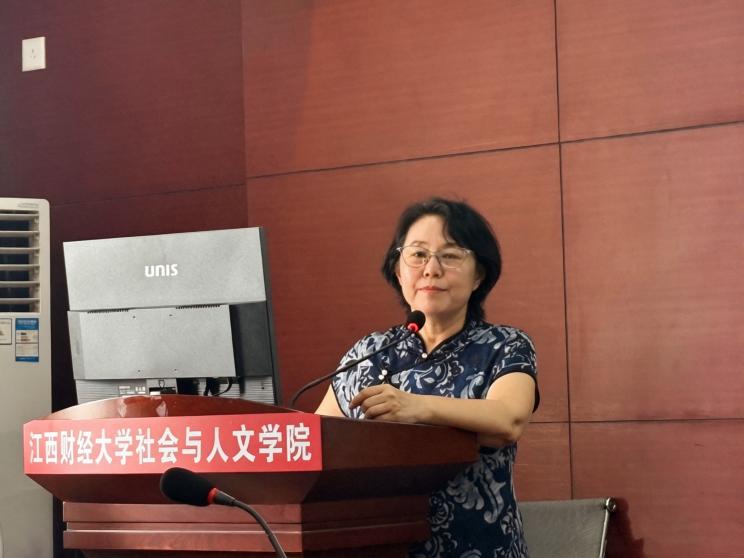
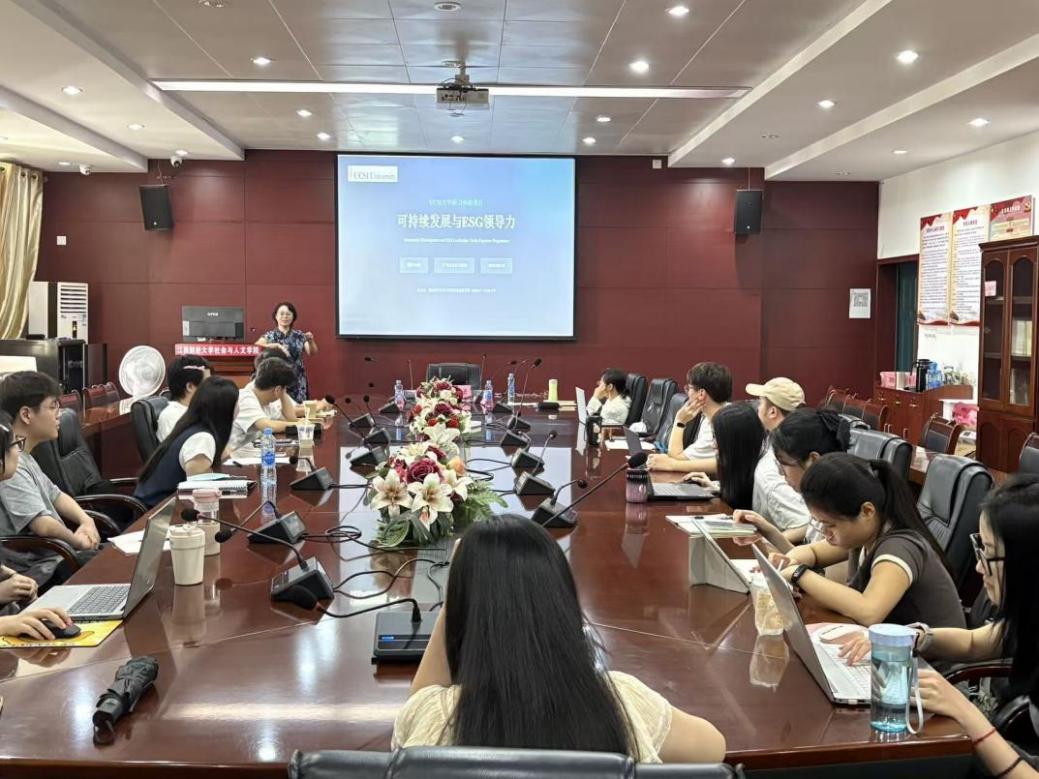
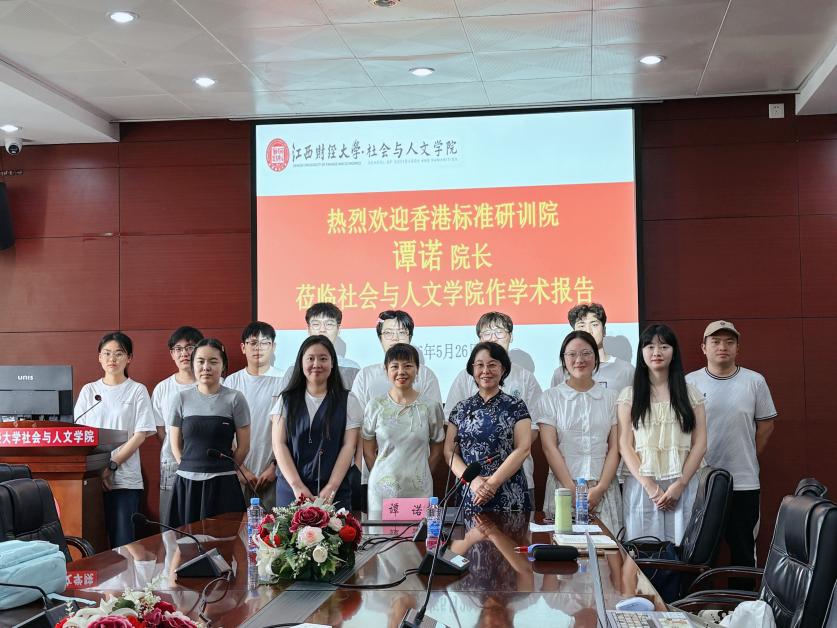
On the morning of May 26, Dr. Tan Nuo,Executive Dean of the Hong Kong Institute of Standards and Training, was invited to the School of Society and Humanities to deliver an academic lecture titled“The Convergence of the Green Economy and Humanities&Social Sciences: The Global ESG Trends and New Opportunities for Interdisciplinary Talent”in Room Y429 of Yinglu Building. The lecture was attended by faculty and students from across the school and was part of our university’s Global Competence Lecture Series. Dr. Tan’s talk focused on climate injustice, the European Union’s green trade barriers, and the critical role of social workers within the ESG framework. She outlined a professional transition path for social work from“post-event relief”to“pre-event governance.”The event was chaired by the Vice Dean of the school, Hong Lumin, and the atmosphere was academically engaging.
At first, Dr. Tan began with typical cases of global climate injustice, directly highlighting the severity of the issue. She noted that while the coastal regions of the Philippines contribute negligibly to global carbon emissions, they suffer some of the most severe consequences of climate disasters. In the Pacific island nation of Tuvalu, rising sea levels have left its 11,000 citizens facing a dual crisis: the loss of their homes and the potential loss of their national identity. Meanwhile, in Africa’s Sahel region, climate change is closely linked to an increased risk of armed conflict. These facts clearly demonstrate that the climate crisis is, at its core, a crisis of social justice. In this context, the role of social workers must expand to include post-disaster psychological reconstruction, the protection of cultural identity, and support for transnational resettlement.
Dr. Tan then shifted her focus to the international economic sphere. She analyzed the impact of the EU’s Carbon Border Adjustment Mechanism (CBAM), which is set to take effect in 2026. Initially covering six major industries—including steel, aluminum, and cement—the mechanism will increase costs for relevant Chinese exporters by 6% to 8%. She emphasized that the green transition is not purely a technical issue; social workers must be involved to assess the social impacts of the transition on workers and communities, ensuring a“just transition”so that vulnerable groups do not bear the costs alone.
When analyzing the ESG framework, Dr. Tan highlighted the professional strengths of social work. She pointed out that the Environmental (E) pillar is led by engineers, the Governance (G) pillar by legal and management professionals, and the Social (S) pillar by social workers. Drawing on case studies of Chinese enterprises expanding into Malaysia, she analyzed complex social issues such as land acquisition, labor rights protection, and multicultural coexistence. She emphasized that social workers’capabilities in qualitative research, social impact assessment, and stakeholder communication are precisely the core competencies most needed in the ESG field. She noted that there is a global shortage of approximately three million ESG professionals, and social workers with relevant skills can earn more than three times the salary of those in traditional roles.
When discussing talent development, Dr. Tan highlighted a critical paradigm shift: social workers should move from post-disaster emergency relief to preemptive governance at the project planning stage, transitioning from the end of the resource distribution chain to the core of corporate strategy. She encouraged students to expand their future career paths from micro-level psychological counseling to meso-level ESG cross-departmental coordination and ultimately to macro-level policy advocacy and roles in international organizations, stating frankly that“the golden age of social work has arrived. ”
During the Q&A session, in response to students’ concerns about supplementing interdisciplinary knowledge, Dr. Tan recommended leveraging AI tools for targeted learning to rapidly build personal knowledge bases. She also introduced programs such as summer research camps and overseas exchange opportunities, encouraging everyone to strengthen core social work competencies, proactively cross disciplinary boundaries, and find their niche within the green economy.
This lecture provided faculty and students with a clearer and more systematic understanding of climate injustice, green trade barriers, and the role of social workers in ESG. It also offered practical guidance and actionable pathways for future interdisciplinary research and career development. The lecture powerfully inspired students’sense of mission and proactive engagement in international governance and green development, while injecting new momentum into the School’s efforts to innovate talent development models and serve the national“Dual Carbon”strategy and global Sustainable Development Goals.
Editor’s Note: This lecture is part of the Global Competence Lecture Series at Jiangxi University of Finance and Economics. The series aims to broaden the international horizons of faculty and students and enhance their comprehensive ability to solve complex problems in the context of globalization. It is reported that this is reported to be the fourth Global Competence lecture hosted by the School of Sociology and Humanities in 2026.
(Translator: Hong Lumin, Huang Rong, Yao Keyan; Reviewer: Jiang Guohe)
Address:West Yu Ping Street, Changbei, Nanchang, Jiangxi Province, P.R.China Post code: 330013
Copyright © School of Sociology and Humanities All Rights Reserved