中文
中文
News 


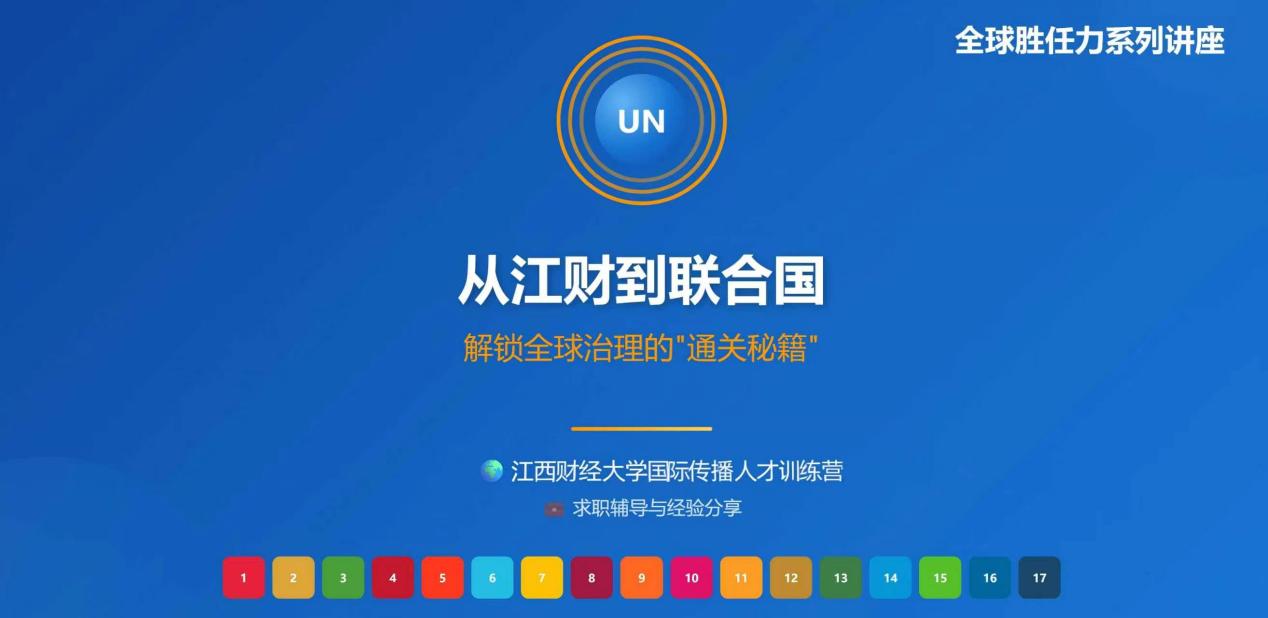
On May 13, Zhang Zhaoyu, an outstanding graduate of the Social Work program at the JUFE School of Sociology and Humanities, delivered a lecture titled “From JUFE to the United Nations: The Guide to Unlocking Global Governance” to faculty and students. This event served as a warm-up for JUFE’s International Communication Talent Training Camp and was part of JUFE’s Global Competence Lecture Series. The lecture was moderated by Hong Lumin, Vice Dean of the JUFE School of Sociology and Humanities, and was actively attended by students from various grades and majors. Speaker Zhang Zhaoyu shared his personal experiences and career planning on how to transition from campus life to international organizations, while also providing an overview of the landscape of international organizations, their development trends, and career pathways.
At the outset of the lecture, Zhang Zhaoyu systematically outlined the United Nations’ profile, organizational structure, and the broader landscape of international organizations, helping students develop an macro-level understanding of the global governance system. He noted that international organizations extend beyond the UN and encouraged students to broaden their horizons by exploring other institutions, including multilateral development banks, regional organizations, specialized agencies, and non-governmental organizations. He particularly emphasized the importance of professional alignment, pointing out that students from different disciplines can find corresponding organizations where they can leverage their specific skills.
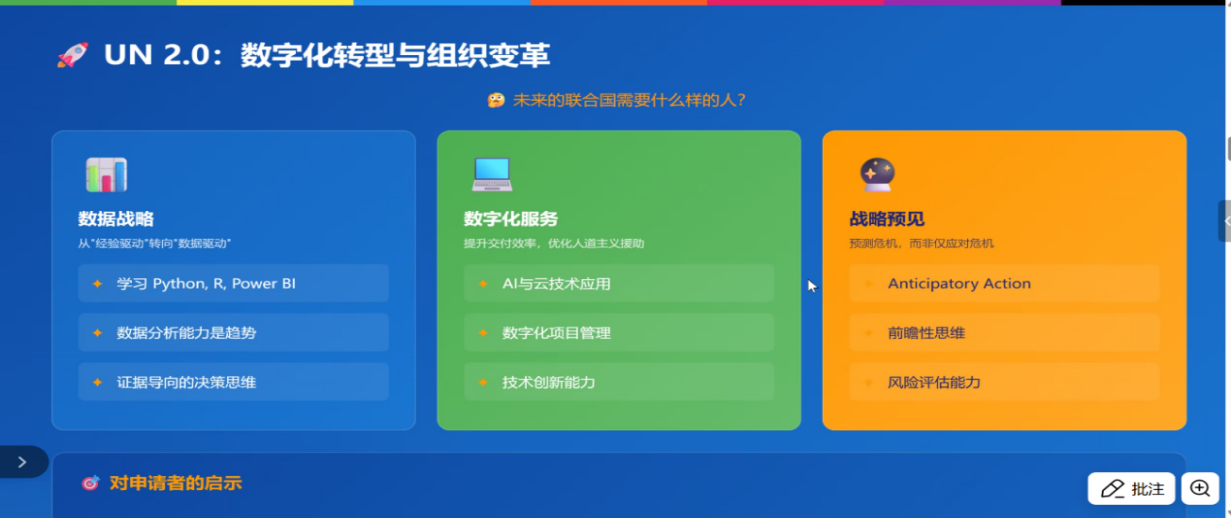
In the section on digital transformation and organizational change in international organizations, he focused on digital transformation and organizational reform within the context of UN 2.0. He analyzed the new demands international organizations have for multidisciplinary talent across three dimensions: data strategy, digital services, and strategic foresight. He emphasized that in the face of rapid advancements in new technologies such as AI, continuous learning and the refinement of one’s capabilities are crucial.
In the latter half of the lecture, Zhang Zhaoyu shared the reality of working at the United Nations. Drawing on his personal experiences, he corrected students’ one-sided perceptions of the UN and urged them to view the work environment of international organizations more pragmatically. He stressed that language proficiency and cross-cultural communication skills serve as the “key” to opening the doors of international organizations, while maintaining a continuous focus on global issues, working in areas of need within developing countries, gaining diverse experiences, and thorough preparation can effectively build a competitive edge.
Zhang Zhaoyu noted that the government is currently providing strong support for universities to cultivate future talent for international organizations, and he advised students to pay attention to internship programs offered by the China Scholarship Council and other relevant international organizations. Finally, he shared practical job-hunting strategies and techniques for international organizations, including how to leverage platform resources, expand professional networks, and refine resumes and cover letters. He emphasized that students should embody three core values—Integrity, Professionalism, and Respect for Diversity—and develop eight core competencies: Communication, Planning, Innovation, Learning, Accountability, Teamwork, Client Orientation, and Technology. Finally, he advised students to start as interns and stressed the importance of carefully reading and analyzing job requirements before applying, noting that interviews will focus on assessing the specific competencies required for the role.
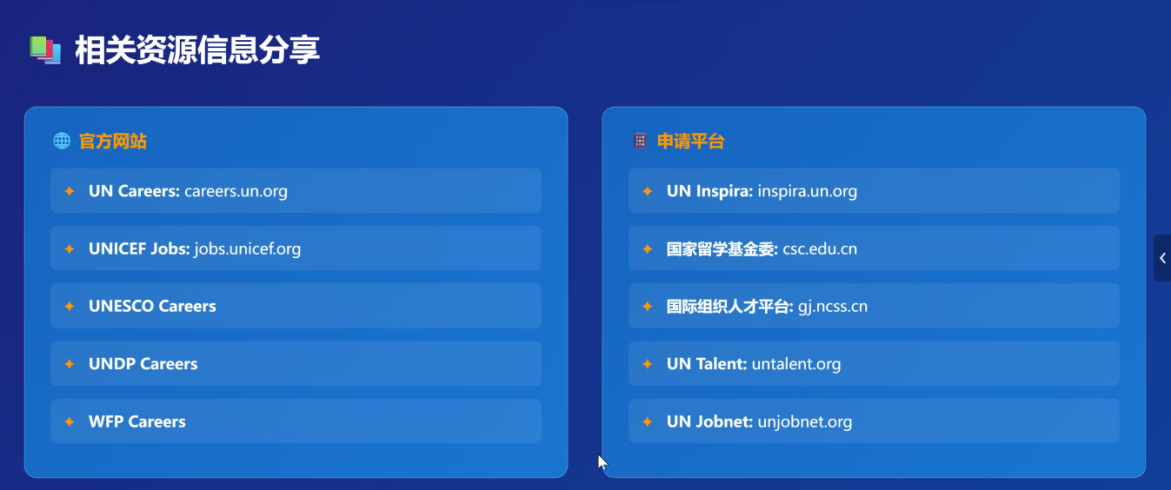
Zhang Zhaoyu’s presentation made the United Nations’ talent needs and work methods tangible and relatable. Combining theoretical depth with practical experience, the lecture ignited students’ passion for international affairs and charted a clear path forward for those aspiring to pursue careers in this field.
In closing, Professor Hong Lumin noted that this lecture represents a key initiative in JUFE’s efforts to advance international talent development. Moving forward, JUFE will continue to leverage the International Organization Reserve Talent Training Camp to invite more distinguished alumni and experts to campus for exchanges. This initiative aims to help students enhance their global competence and demonstrate the sense of responsibility and professionalism of JUFE students on the international stage. She encouraged students to follow the example of alumnus Zhang Zhaoyu, to continue striving for excellence, to step onto the international stage as soon as possible, and to let the world hear the voice of JUFE!
(Translator: Hong Lumin, Yuan Dianyi, Yao Keyan Reviewer: Jiang Guohe)
Address:West Yu Ping Street, Changbei, Nanchang, Jiangxi Province, P.R.China Post code: 330013
Copyright © School of Sociology and Humanities All Rights Reserved